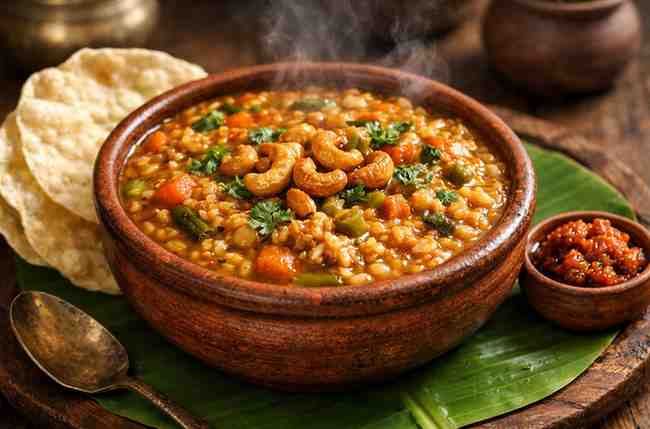
If there’s one dish that perfectly captures the warmth and depth of South Indian cuisine, it’s Bisi Bele Bath. Rich, wholesome, and deeply satisfying, this iconic dish from Karnataka is more than just food—it’s comfort, tradition, and nutrition all served together.
What is Bisi Bele Bath?
Bisi Bele Bath is a flavorful one-pot dish made from rice, lentils (toor dal), vegetables, and a special spice blend. The name itself comes from the Kannada language:
- Bisi: Hot
- Bele: Lentils
- Bath: Rice-based dish
So, quite literally, it means “hot lentil rice dish.”
Origins and History
Bisi Bele Bath traces its roots to the royal kitchens of Mysuru. It is believed to have been first prepared in the Mysore Palace, where chefs experimented with combining rice, lentils, and spices into a single dish that was both nutritious and delicious.
Over time, it spread across Karnataka and became a staple in households, restaurants, and festivals.
What Makes Bisi Bele Bath Unique?
At first glance, it may resemble sambar rice—but Bisi Bele Bath has a personality of its own.
- Signature Spice Blend: The heart of the dish lies in Bisi Bele Bath powder, a roasted spice mix made from coriander seeds, dried red chilies, cinnamon, cloves, and more. This gives the dish its distinctive aroma and taste.
- Balanced Texture: It has a soft, slightly mushy consistency, where rice and dal blend seamlessly with vegetables.
- Rich Flavor Profile: Slightly spicy, mildly tangy (from tamarind), and lightly sweet (a hint of jaggery is often added).
- Loaded with Vegetables: Common vegetables include carrots, beans, potatoes, peas, and drumsticks.
How is Bisi Bele Bath Made?
Here’s a simplified version of the cooking process:
- Step 1: Cook Rice and Dal – Rice and toor dal are cooked together until soft.
- Step 2: Prepare Vegetables – Vegetables are boiled or pressure-cooked separately.
- Step 3: Add Tamarind and Spices – Tamarind pulp and Bisi Bele Bath powder are added for flavor.
- Step 4: Combine Everything – Rice, dal, vegetables, and spices are mixed together and simmered.
- Step 5: Tempering (Tadka) – A final tempering of mustard seeds, curry leaves, dried red chilies, and asafoetida is added in ghee for extra aroma.
Variations of Bisi Bele Bath
- Khara Bath Style: Spicier and less sweet
- Hotel-style Bisi Bele Bath: Richer with more ghee and cashews
- Instant versions: Made using ready-made spice mixes or pressure cookers
How is it Served?
- A dollop of ghee
- Crispy boondi or potato chips
- Cooling raita
- Papad on the side
Nutritional Benefits
- Carbohydrates from rice for energy
- Protein from lentils
- Fiber and vitamins from vegetables
- Healthy fats when prepared with ghee
It’s a complete meal in itself.
Cultural Importance
In Karnataka, Bisi Bele Bath is a staple at family meals, festivals, temple offerings, and traditional feasts. It represents the essence of home-cooked comfort food and is loved across generations.
Why You Should Try Bisi Bele Bath
- Hearty and filling
- Packed with flavor
- Nutritionally balanced
Final Thoughts
Bisi Bele Bath is not flashy, but it doesn’t need to be. Its magic lies in its simplicity and depth of flavor. Every spoonful offers warmth, nostalgia, and a taste of Karnataka’s rich culinary heritage.
So whether you’re exploring South Indian cuisine or just looking for a comforting meal, Bisi Bele Bath is a dish that never disappoints.