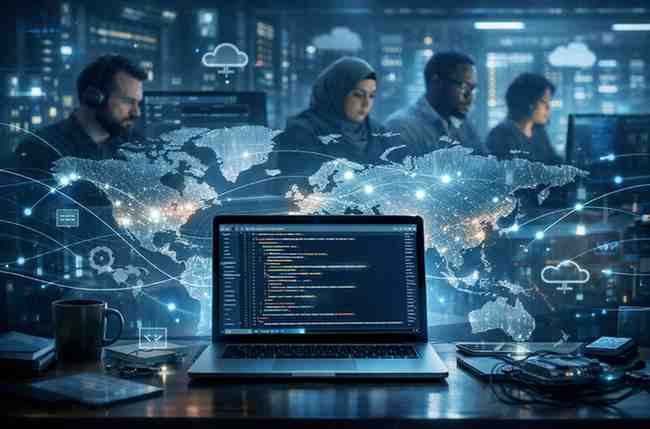
In a world driven by technology, most people interact daily with software they never fully see or understand. Behind much of this digital infrastructure lies a powerful movement built on collaboration, transparency, and shared knowledge—open-source software.
From the apps on your phone to the servers that run the internet, open-source software quietly powers modern life. But what exactly is it, and why has it become so influential?
What is Open-Source Software?
Open-source software (OSS) is software whose source code is freely available for anyone to view, modify, and distribute. Unlike proprietary software, which is controlled by a company, OSS encourages a collaborative approach where developers from around the world can contribute.
Some of the most widely used open-source projects include:
- Linux
- Mozilla Firefox
- Apache HTTP Server
- WordPress
These projects demonstrate how open collaboration can produce software that rivals—and often surpasses—commercial alternatives.
A Brief History of Open Source
The idea of sharing code dates back to the early days of computing, when programmers freely exchanged software to solve problems. However, the modern open-source movement gained momentum in the late 20th century.
A key milestone was the creation of the Free Software Foundation in 1985, which promoted the concept of software freedom. Later, the term “open source” was popularized to make the idea more accessible to businesses and developers alike.
The rise of the internet accelerated collaboration, enabling developers worldwide to contribute to shared projects in real time.
Key Principles of Open Source
- Transparency: Anyone can inspect the code, ensuring accountability and trust.
- Collaboration: Developers from different backgrounds contribute ideas, fixes, and improvements.
- Freedom: Users can modify the software to suit their needs.
- Community-Driven Development: Projects evolve based on collective input rather than a single authority.
Why Open Source Matters
- Innovation at Scale: Open source allows thousands of developers to work on a single project, accelerating innovation.
- Cost Efficiency: Most OSS is free to use, reducing costs for individuals, startups, and enterprises.
- Security and Reliability: With many eyes reviewing the code, vulnerabilities can be identified and fixed quickly.
- Flexibility: Organizations can customize software without being locked into a vendor.
Real-World Impact
Open-source software is not just for developers—it impacts everyone.
- The majority of web servers run on technologies like Linux and Apache HTTP Server
- Many mobile devices rely on open-source components
- Businesses use OSS to build scalable, reliable systems
Even major companies such as Google, Microsoft, and Facebook actively contribute to open-source projects.
Popular Open-Source Licenses
- MIT License: Very permissive, allows almost unrestricted use
- GNU General Public License (GPL): Requires derivative works to also be open source
- Apache License: Allows use with fewer restrictions and includes patent protection
Challenges of Open Source
- Sustainability: Many projects rely on volunteers, making long-term maintenance difficult.
- Security Risks: While transparency helps, poorly maintained projects can become vulnerable.
- Fragmentation: Multiple versions of the same software can lead to compatibility issues.
- Learning Curve: For beginners, contributing to open source can feel overwhelming.
How to Get Involved
You don’t have to be an expert programmer to contribute to open source. Here are a few ways to start:
- Explore projects on GitHub
- Report bugs or suggest features
- Improve documentation
- Contribute code or design
Even small contributions can make a big difference.
The Future of Open Source
Open source continues to grow as a foundation of modern technology. With the rise of cloud computing, artificial intelligence, and blockchain, OSS is more relevant than ever.
Projects like Kubernetes and TensorFlow are shaping the future of computing, enabling innovation at an unprecedented scale.
Final Thoughts
Open-source software is more than just a development model—it’s a philosophy built on sharing, collaboration, and collective progress. It empowers individuals, drives innovation, and ensures that technology remains accessible to all.
Whether you’re a developer, a business owner, or simply a tech user, open source plays a role in your digital life. And as the world becomes increasingly connected, its importance will only continue to grow.
In the end, open source reminds us of a simple yet powerful idea: when knowledge is shared, everyone benefits.